

Learning how to solvent weld PVC pipe step by step is one of the most valuable skills any plumber or serious DIYer can develop. Unlike mechanical fittings that can loosen over time, a properly executed solvent welded joint fuses pipe and fitting into a single, monolithic unit that routinely outlasts the structure it serves.
This guide covers everything from choosing the right solvent cement to final curing times — with the accuracy and depth that the job demands.
What Is Solvent Welding? (And How It Differs from Gluing)
A common misconception in plumbing is that solvent cement is “glue.” It is not.
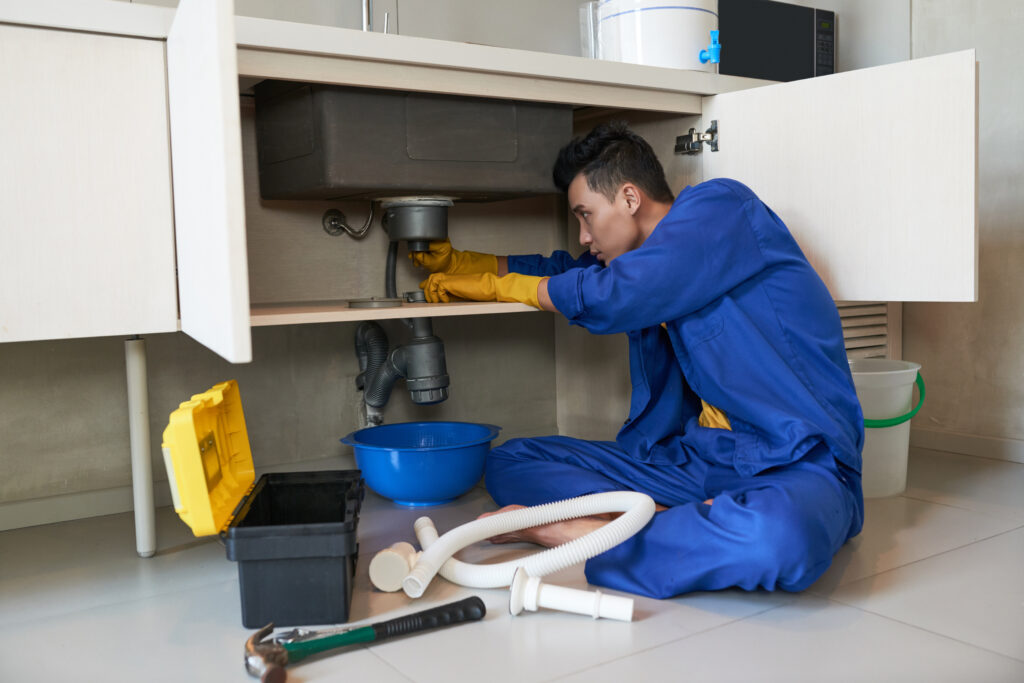
Solvent cement does not bond two surfaces — it dissolves them. The chemical solvents in the cement temporarily liquefy the outer layer of both the pipe and fitting. When pressed together, the two softened surfaces intermingle at a molecular level. As the solvents evaporate, the combined material re-hardens into one continuous piece of plastic.
This is the fundamental difference between solvent cement and glue in plumbing: adhesives bond at the surface, while solvent cement creates a chemical weld through molecular fusion. The result, when done correctly, is stronger than either the pipe or the fitting individually.
Choosing the Right Solvent Cement for Your Pipe Material
Solvent cement is not universal. Using the wrong product is one of the most common — and costly — solvent welding mistakes a plumber can make.
PVC Solvent Welding
Standard grey or white PVC (polyvinyl chloride) pipe used in DWV (drain-waste-vent) and cold-water supply requires PVC solvent cement, typically colored grey or clear. For pipes 2 inches and under, a medium-bodied cement works well. Pipes 3 inches and above require a heavy-bodied formulation for adequate gap-filling.
Best Solvent Cement for CPVC Pipe Installation
CPVC (chlorinated polyvinyl chloride), used in hot and cold potable water systems, demands CPVC-specific solvent cement — usually yellow or orange. Standard PVC cement will not adequately bond CPVC. Brands like Oatey CPVC Cement and Christy’s Red Hot Blue Glue CPVC formula are widely trusted by professionals. The CPVC solvent cement must be compatible with the pipe’s temperature rating (typically up to 180°F/82°C).
ABS Pipe Welding
ABS (acrylonitrile butadiene styrene) pipe, common in older DWV systems, uses black ABS cement. Never use PVC cement on ABS — the chemical composition differs enough to produce an unreliable joint.
Pro Tip: When connecting ABS to PVC — a transition that happens in renovation work — use a transition cement specifically rated for both materials.
Tools Required for Solvent Welding PVC Pipes
Before starting any solvent welding process, assemble the following:
- Pipe cutter or miter saw — for clean, square cuts
- Deburring tool / chamfer tool — removes the ridge left by cutting
- Clean rags or paper towels — for wiping surfaces
- Purple PVC primer (or clear, where codes permit)
- Correct solvent cement for your pipe material
- Applicator brushes or daubers — matched to pipe size (use the can’s built-in applicator for sizes up to 2″)
- Permanent marker — for alignment marks
- Timer or watch — for monitoring set and cure times
- Safety glasses and chemical-resistant gloves
- Ventilation — a fan or open space is mandatory
Proper Pipe Preparation for Solvent Welding Joints
The quality of a solvent weld is directly proportional to the quality of surface preparation. Skipping steps here is where most failures originate.
Step 1 — Cut the Pipe Square
Use a ratchet pipe cutter for small-diameter pipe or a miter saw for larger runs. A square cut ensures full contact across the entire joint face. An angled cut reduces the bonding surface and creates a weak point.
Step 2 — Deburr and Chamfer
The cutting process leaves a sharp interior burr and an exterior ridge. Remove both. The chamfer — a slight bevel on the pipe’s outer edge — is critical: it prevents the pipe end from “snow plowing” the cement toward the back of the socket rather than distributing it evenly.
Step 3 — Dry-Fit and Mark Alignment
Insert the pipe into the fitting without cement. Mark both the pipe and fitting with a permanent marker at the same rotational position. This alignment mark ensures you can seat the joint correctly during the live weld, when working time is measured in seconds.
Step 4 — Clean All Surfaces
Wipe down pipe ends and socket interiors with a clean rag. Remove all moisture, dust, and oils. Even skin oils from your fingers can compromise the weld.
How to Apply Primer and Solvent Cement Correctly
Applying Primer
Most building codes require purple PVC primer before cement application on PVC systems. Primer softens and cleans the pipe surface, preparing it for deeper chemical penetration by the cement.
- Apply primer to the socket interior first, then to the pipe exterior
- Use a circular scrubbing motion — don’t just dab
- The surface should show a purple stain; if it looks dry and unchanged, reapply
- Allow primer to become tacky (10–15 seconds) before applying cement
CPVC systems also require CPVC-compatible primer. ABS pipe does not require primer, though some jurisdictions recommend it.
Applying Solvent Cement
This phase is time-critical. Work decisively.
- Apply cement to the socket interior — use a full, even coat with the applicator
- Apply cement to the pipe exterior — cover the entire bonding area, which equals the socket depth
- Apply a second, lighter coat to the socket — this keeps the surface active
- Insert and seat the pipe — push firmly with a quarter-turn rotation to distribute cement and close any dry spots
- Hold for 30 seconds — the chemical pressure inside the joint will push components apart if not held
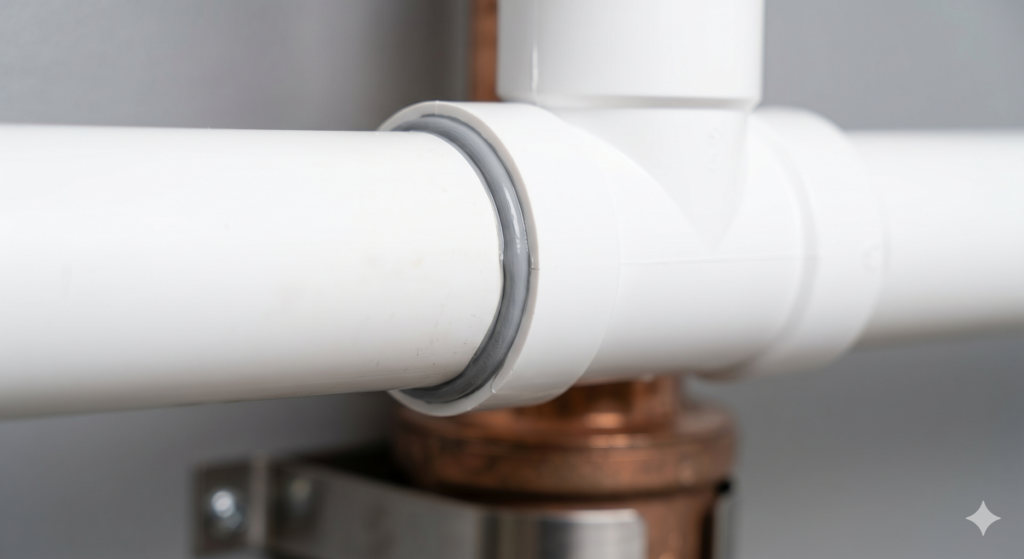
- Check for a bead of cement around the joint — a uniform bead is a positive sign of full coverage; no bead in a section indicates a potential dry spot
Critical: From first cement application to fully seated joint, the entire solvent welding process should take no more than 20–30 seconds for small pipes, and 40–60 seconds for larger diameters. After that, the cement begins to set.
How Long Does Solvent Cement Take to Cure?
“Set time” and “cure time” are different thresholds, and confusing them causes failures.
| Phase | What It Means | Typical Duration |
|---|---|---|
| Initial Set | Joint can be handled without movement | 2–5 minutes |
| Pressure Test Ready | Joint can hold low pressure | 1–4 hours |
| Full Cure | Maximum strength reached | 24–72 hours |
Cure times are significantly affected by environmental conditions. Cold temperatures slow the solvent evaporation process, extending cure times by 50–100%. High humidity can introduce moisture into the joint before cure is complete. Conversely, extreme heat can flash-dry the cement before the pipe is fully seated.
As a field rule: never pressure-test a new solvent welded system within 2 hours and always follow the cement manufacturer’s published cure schedule for the pipe diameter and ambient temperature.
Common Solvent Welding Mistakes and How to Avoid Them
Even experienced installers make these errors under pressure:
| Mistake | Consequence | Fix |
|---|---|---|
| Skipping primer | Weak, leak-prone joint | Always prime PVC/CPVC |
| Using wrong cement | No molecular bond forms | Match cement to pipe material |
| Applying too little cement | Dry spots, voids | Maintain full, wet coat |
| Applying too much cement | Blocked flow inside pipe | Use size-appropriate applicator |
| Not holding the joint | Pipe springs back | Hold 30 seconds minimum |
| Ignoring temperature | Extended or failed cure | Follow temp-adjusted cure tables |
| Moving joint before set | Joint tears internally | Do not disturb for 5+ minutes |
How Environmental Conditions Affect Solvent Welding
Temperature below 40°F (4°C) requires a low-temperature cement formulation. In sub-freezing conditions, the solvent cannot evaporate properly, and the joint will fail under pressure even if it appears solid.
Above 110°F (43°C) — common in attics or direct sunlight — the cement may skin over before you can fully seat the pipe. In these conditions, work in pairs: one person applies cement, the other seats the pipe immediately.
Humidity above 60% can introduce moisture vapor into the joint. In high-humidity environments, work quickly and store open cement cans closed between uses.

Expert Insight: What Separates a Good Joint from a Great One
After decades in commercial plumbing, the one differentiator between adequate and excellent solvent welds comes down to pipe preparation techniques. Most failures — whether immediate or years later — trace back to contaminated surfaces, skipped primer, or inadequate chamfering.
An industry study by the Plastic Pipe and Fittings Association (PPFA) found that over 70% of solvent weld failures in field inspection were attributable to improper surface preparation or incorrect cement selection — not the materials themselves. The chemistry works when the process is followed precisely.
Conclusion
Mastering how to solvent weld PVC pipe step by step is not complicated — but it is unforgiving of shortcuts. Choose the right cement for your pipe material, prepare surfaces meticulously, apply primer and cement in the correct sequence, hold the joint firmly, and respect cure times. Follow these principles and you’ll produce solvent welded pipe connections that are genuinely permanent.
Whether you’re working with PVC solvent welding on a drain line, selecting the best solvent cement for CPVC pipe installation in a hot water system, or handling ABS pipe welding on a renovation, the fundamentals are the same: chemistry, preparation, and patience.
FAQ Schema Section
Q1: What is the difference between solvent cement and regular glue for pipes? Solvent cement is not an adhesive. It chemically dissolves the surfaces of both the pipe and fitting, allowing them to fuse together at a molecular level when pressed together. Standard glue bonds surfaces without this fusion. The result of solvent welding is a joint stronger than the pipe itself.
Q2: Do I need primer before applying solvent cement to PVC pipes? Yes, in most cases. Purple PVC primer is required by plumbing codes in most jurisdictions and by most manufacturer warranties. It cleans the surface, removes oxidation, and pre-softens the plastic for deeper solvent penetration. Skipping primer significantly increases the risk of joint failure.
Q3: How long should I wait before running water through a solvent welded joint? For small-diameter PVC (under 2 inches) at room temperature, a minimum of 1–2 hours is recommended before low-pressure water flow. For full system pressure testing, wait at least 24 hours. CPVC and larger-diameter pipe require additional cure time. Always consult the cement manufacturer’s cure schedule.
Q4: Can I use PVC solvent cement on CPVC pipes? No. PVC and CPVC have different chemical compositions and require different cement formulations. Using PVC cement on CPVC produces an unreliable bond that may appear solid but will fail under pressure or temperature stress. Always use CPVC-rated solvent cement for CPVC pipe.
Q5: What causes solvent welded joints to leak after installation? The most common causes are: insufficient cement coverage creating dry spots, using the wrong cement for the pipe material, failing to hold the joint during initial set (allowing it to push apart), inadequate surface preparation (contamination, no primer, uneven cut), or insufficient cure time before pressurization. Following the correct solvent welding process eliminates all of these failure modes.